Waz Here
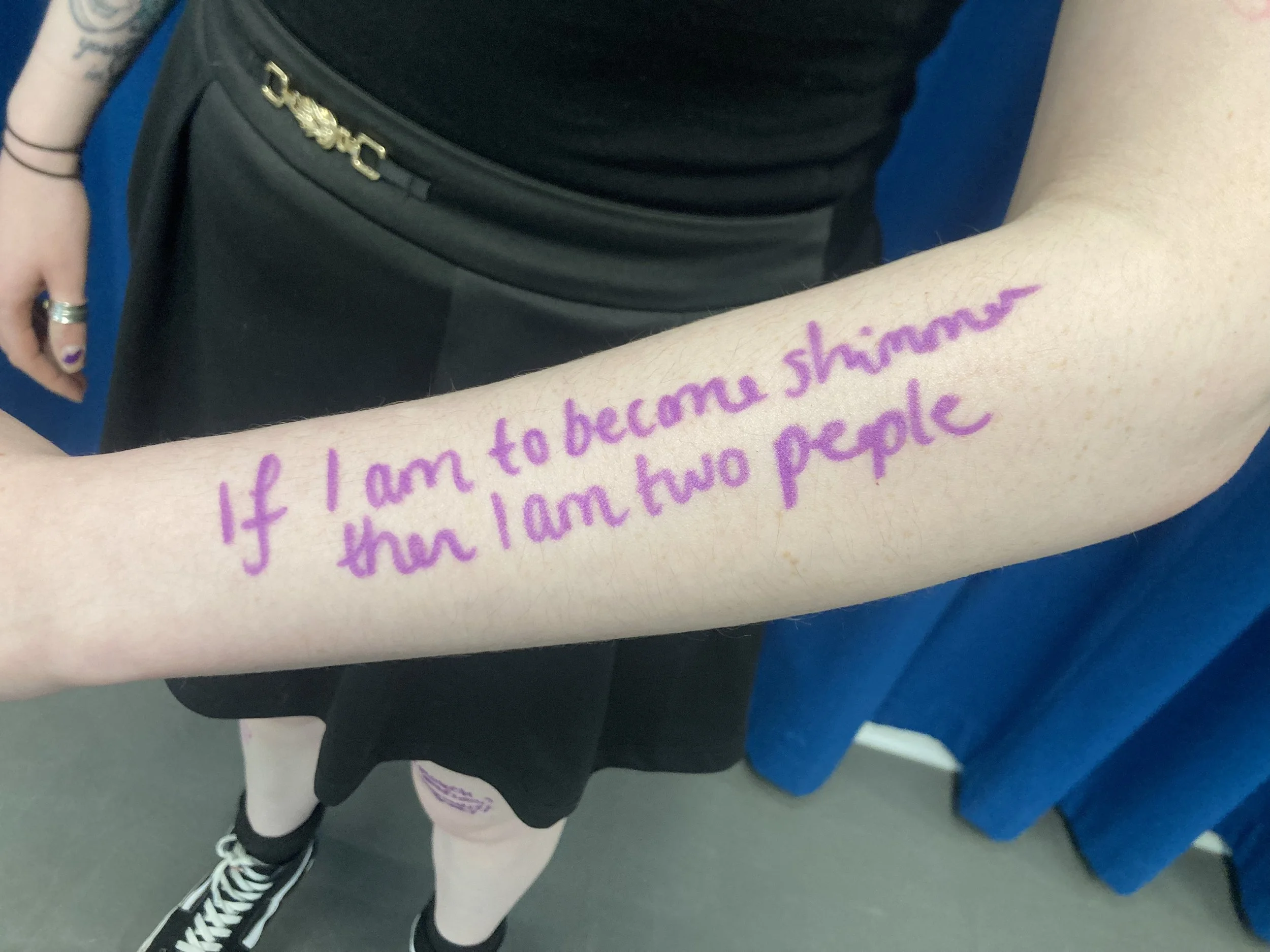
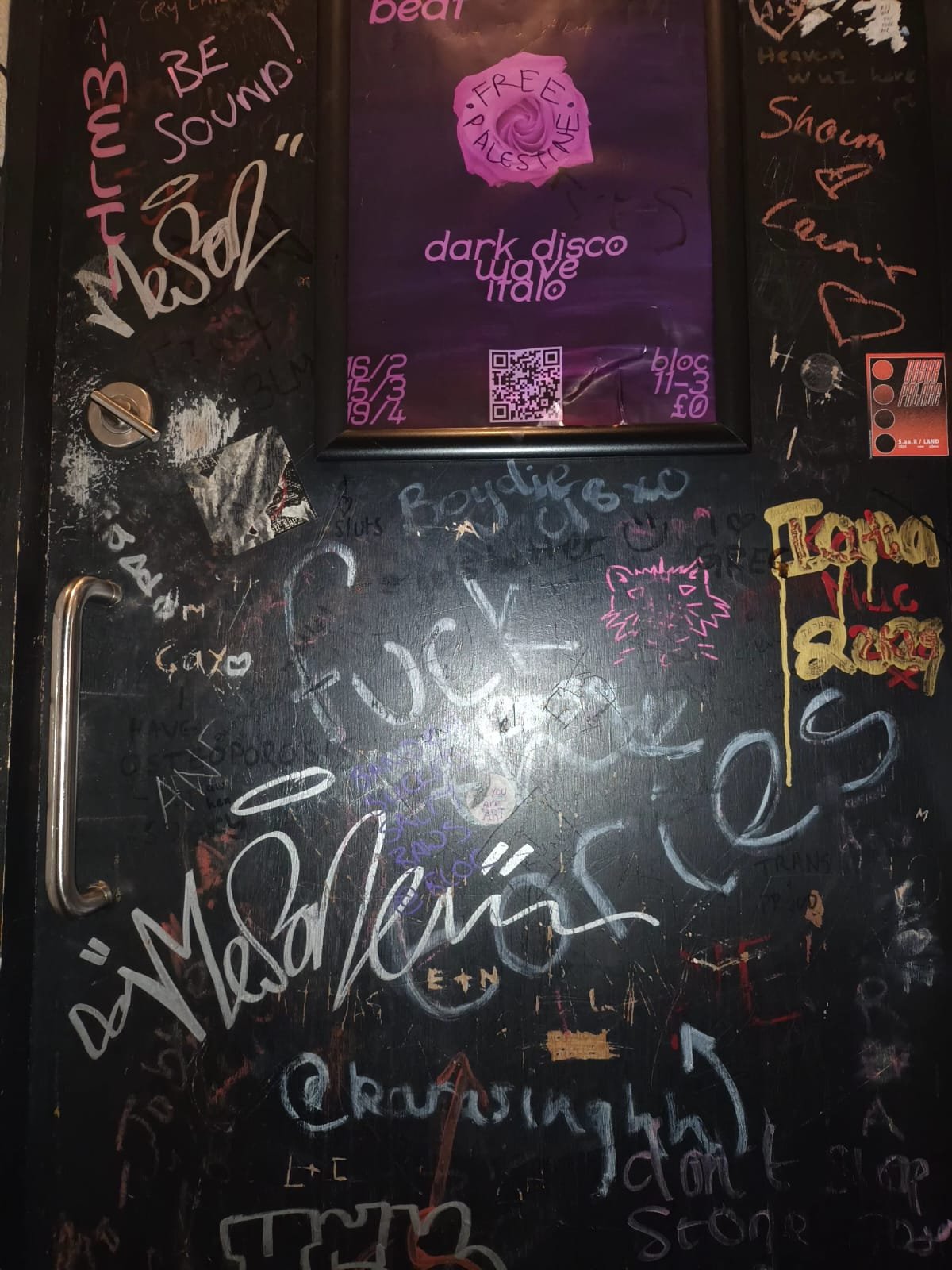
Waz Here is a ritual performance that transforms the intimate, defiant act of bathroom stall graffiti into a live, durational archive. Created and performed by Bee McQueen, the piece invites audience members to inscribe their body—offered as a living wall—mirroring the anonymous, impulsive exchanges found in public toilet cubicles across Glasgow. With a draped backdrop collaged from real graffiti collected from the city, Bee becomes both surface and witness, surrendering authorship while facilitating a space of radical privacy, expression, and catharsis. Waz Here honours the uncurated truths people leave behind, asking: What will you write, if no one knows it's you?
Artistic Intentions
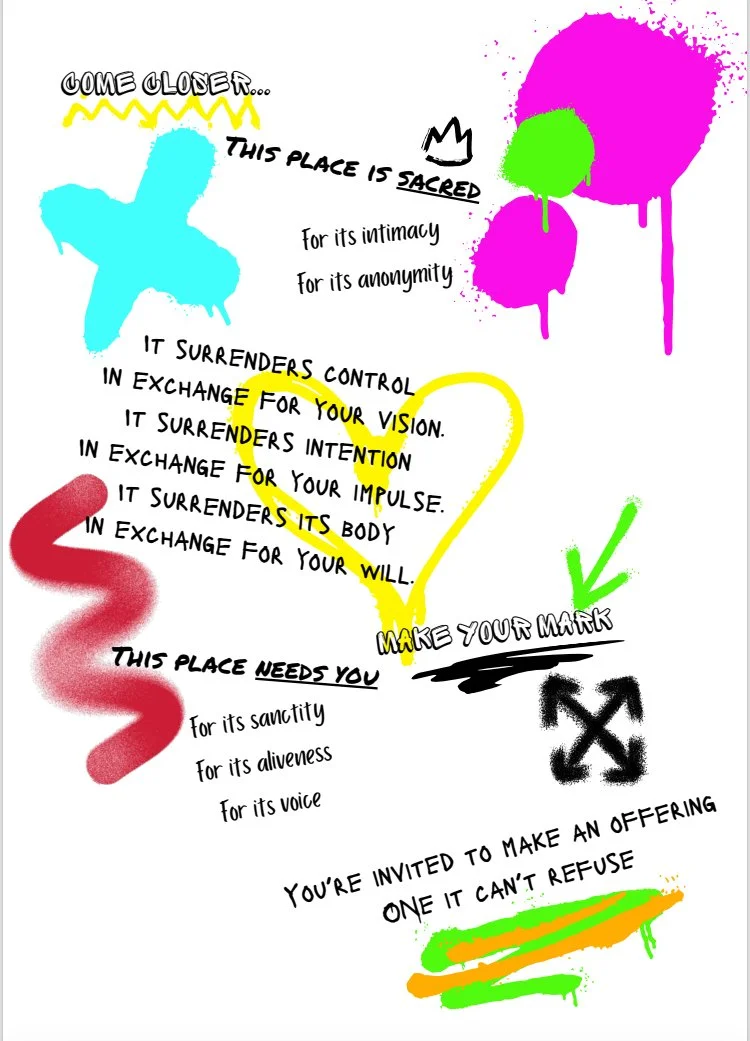
Waz Here was born from Bee McQueen’s fascination with the bathroom stall as a site of unfiltered, anonymous expression—a space where the public and private collapse. The intention was not to imitate this setting, but to embody it. As a performer, Bee offered their body as both surface and ritual site, attempting to carry the essence of the wall: its stillness, its receptiveness, its silent power as a collector of human truths.
Rather than scripting audience interaction, Bee chose to surrender authorial control and instead construct an environment where impulse could take hold. Like the bathroom stall, Waz Here invites without asking, listens without judgment, and remembers without narrative. The performance resists direction, instead presenting an existing archive of graffiti (collected from venues across Glasgow) as context—allowing each audience member to inscribe their own response, their own moment, their own offering.
Framing the work as ritual allowed Bee to explore performance as an act of collective authorship and shared vulnerability. Their body became both sacred object and public wall. In this space, the audience were not spectators—they were creators. Together, they formed a temporary archive of impulses, confessions, provocations, and prayers.
Archival & Research Context
Waz Here is a live-art, participatory performance ritual born from Bee McQueen’s interest in who gets to record history, where memory lives, and how bodies hold evidence. They approached the performance as a living archive—one in which authorship is decentralised and meaning is continually co-created. The vandalised bathroom stall, as a democratic archive, became a central reference: a place where unsanctioned truths are scrawled, layered, half-erased, and left behind.
This approach challenges conventional archival authority. As Athanasios Velios writes, “the archivist’s view remains the dominant version of truth.” In Waz Here, that power is diffused. The audience writes what they want, where they want, when they want, how they want. Bee’s body temporarily holds their markings, becoming a site where privacy and exposure coexist.
The work is in dialogue with performance art histories—particularly Marina Abramović’s Rhythm 0 and Yoko Ono’s Cut Piece, both of which frame the artist’s body as object, handed over to the audience. But unlike those pieces, Waz Here rests in quiet invitation rather than provocation. It honours the ritual of giving and receiving language without surveillance, control, or commentary. Bee was also influenced by CAConrad’s notion of the “extreme present”—recognising the moment someone writes on a wall as inherently poetic, charged with urgency and emotional weight.
The piece also responds to what public bathroom walls often don’t hold. In her research, Bee found mostly jokes, rage, or silence—rarely affirmation or intimacy. Waz Here became a space to imagine what else the wall might long for, and how we might answer.