It’s My House
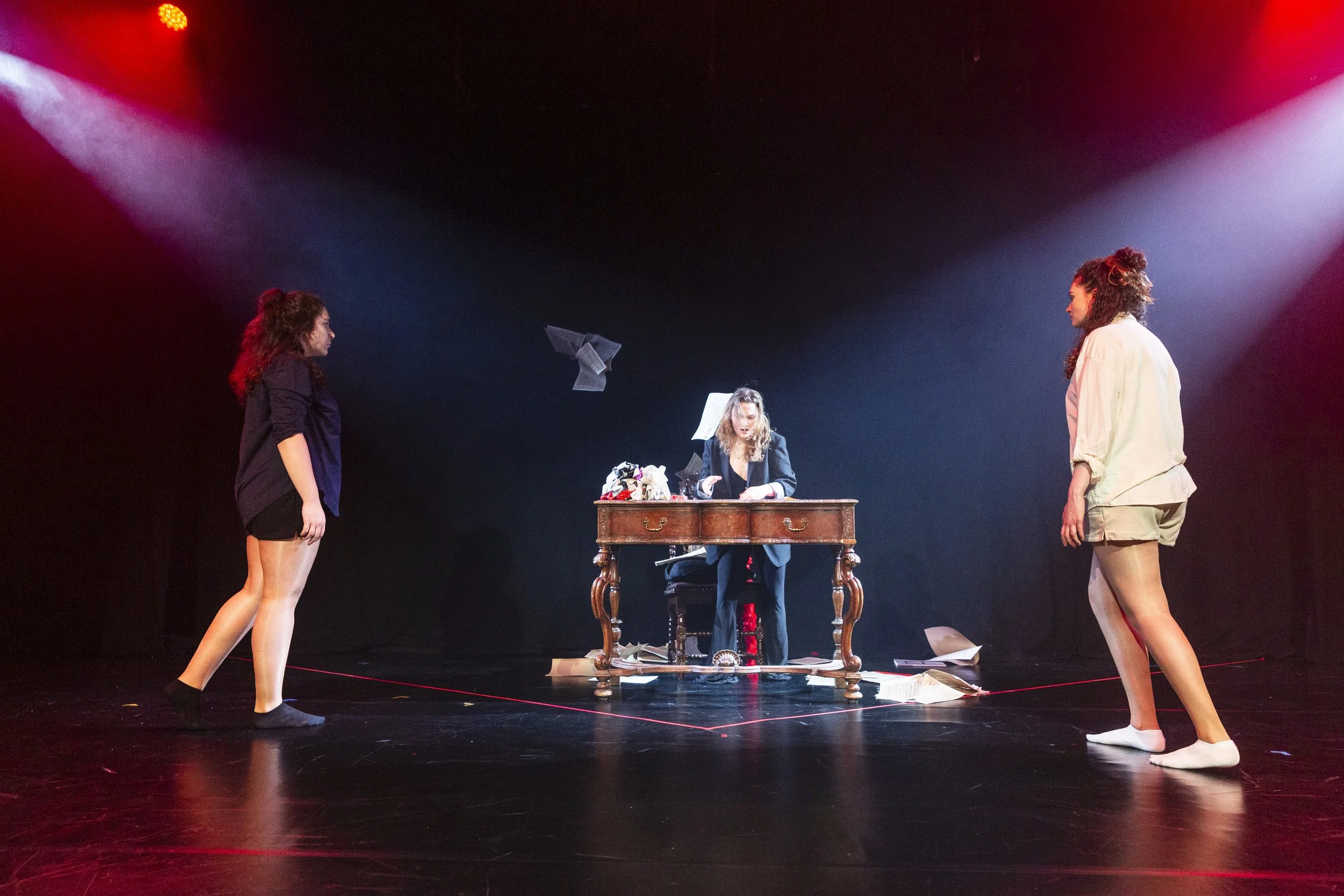
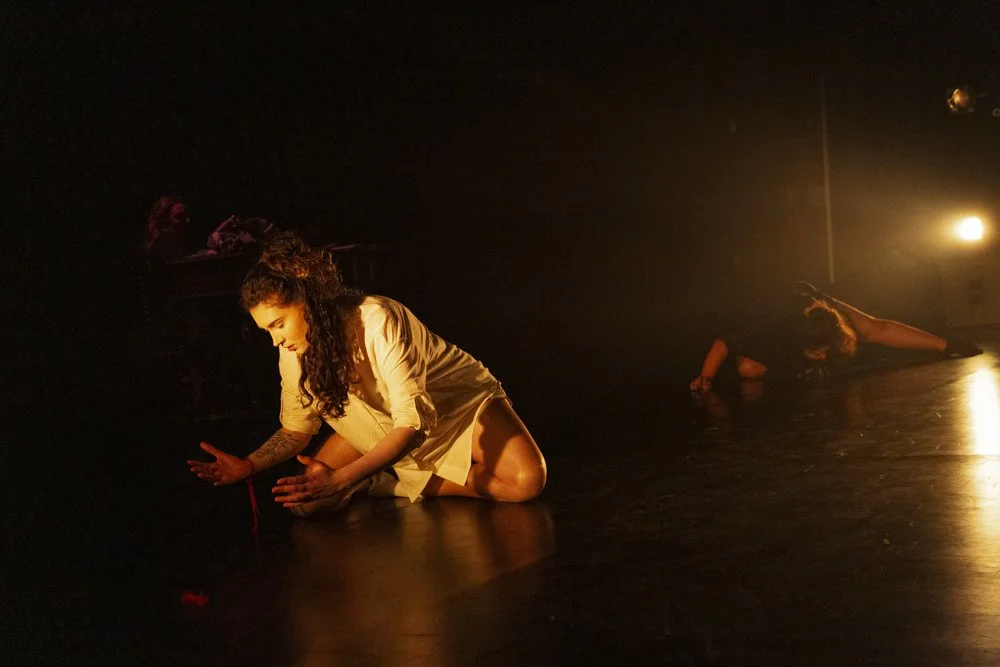
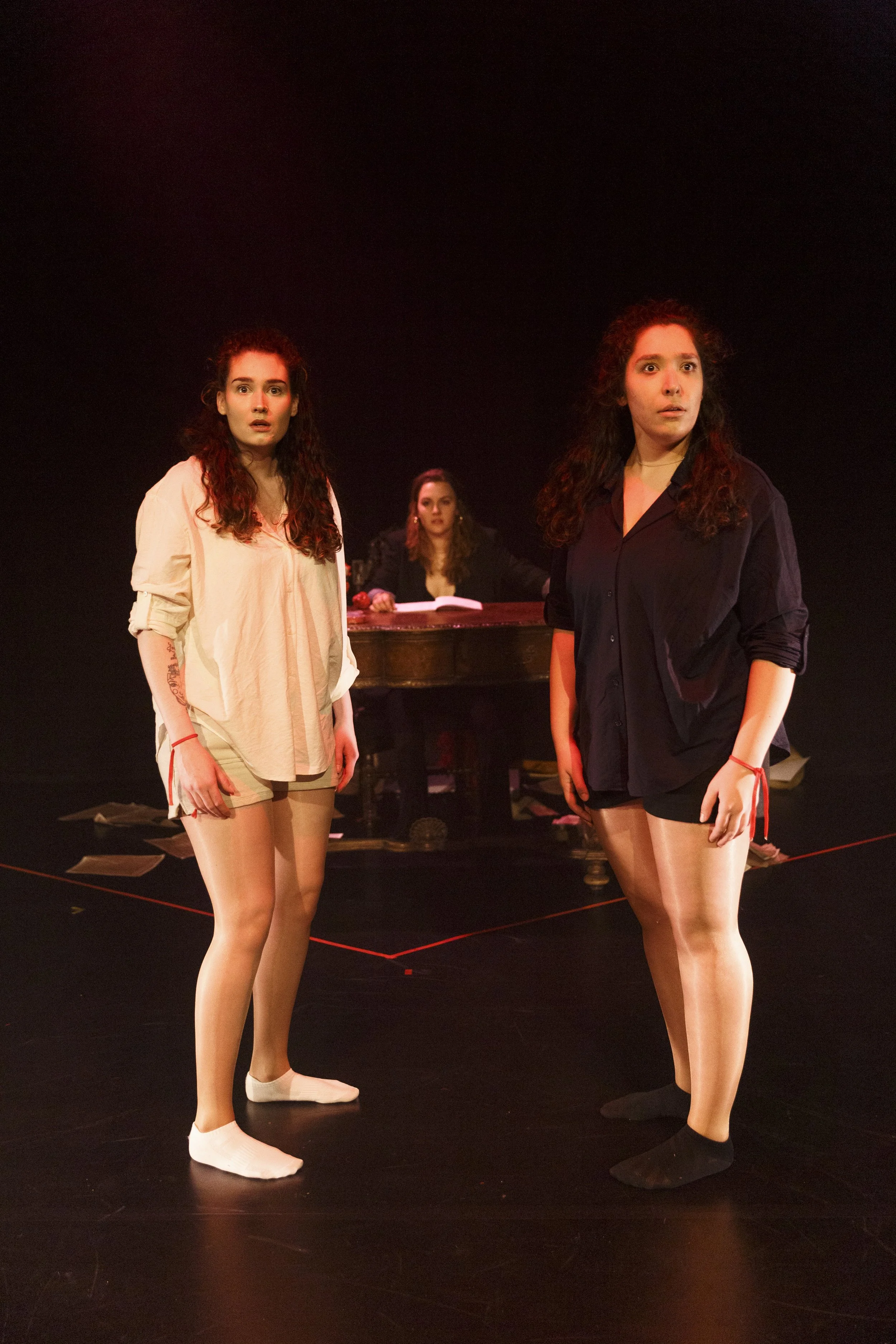
It’s My House is a collaborative live performance that spirals through personas, power, and perception. Three performers, each trapped in their own version of ‘pleasing,’ share space as it shifts from sanctuary to stage to site of collapse. Somewhere between choreography, confession, and chaos, the audience becomes witness to a slow unravelling—of control, of cohesion, of what it means to be “seen” at all.
Developed as part of the Collaborations module at the Royal Conservatoire of Scotland and performed at the inter/sections festival, It’s My House invites its audience into a strange, joyful, and unsettling home of emotional excess, surveillance, and survival.
Artistic Intention
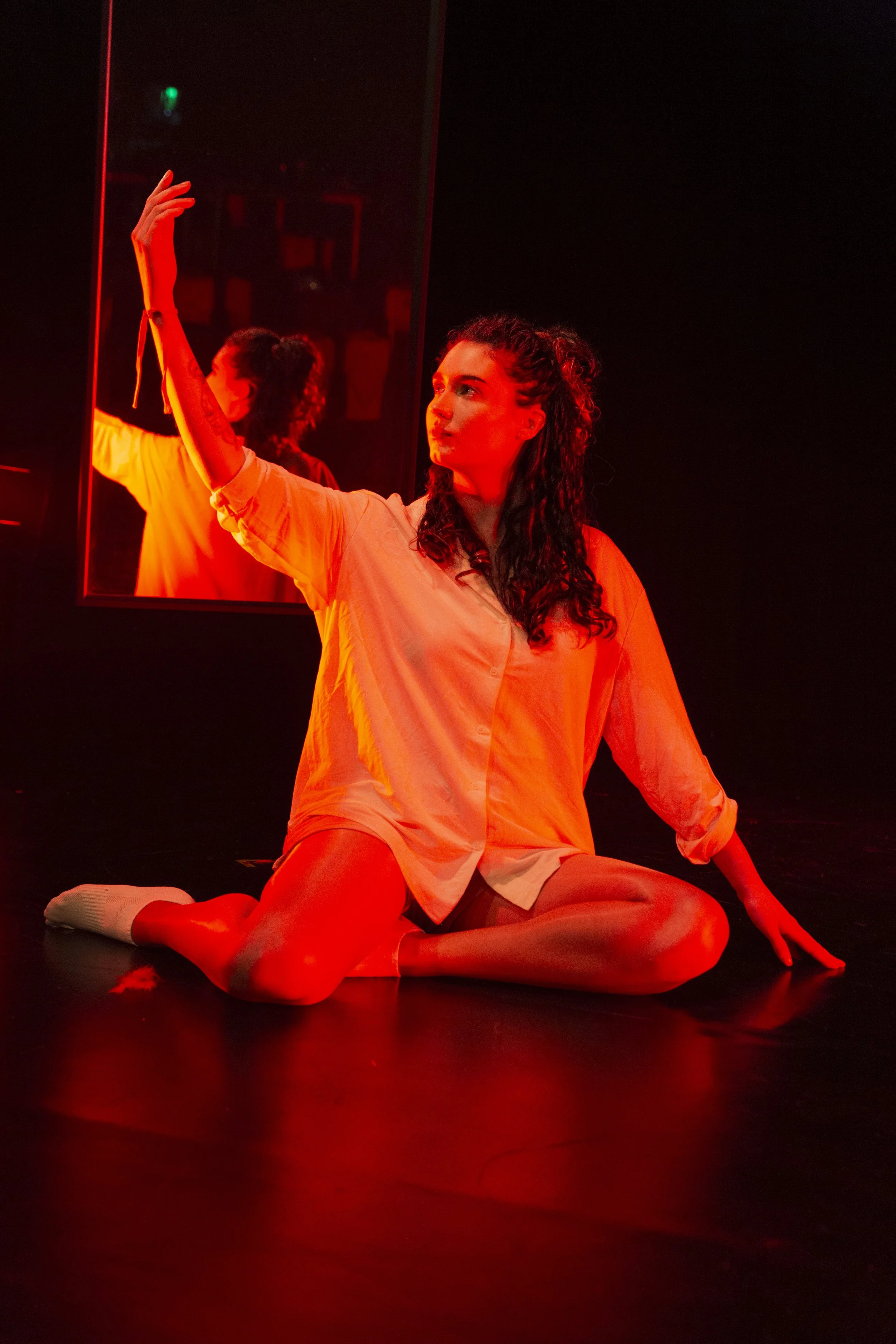
It’s My House emerged from a shared desire to interrogate how performance operates under the pressure of being perceived—particularly through lenses of control, judgement, and internalised expectation. Rather than staging a clear narrative, the work fragmented itself, mirroring the emotional disorientation of trying to hold oneself together while being watched.
Bee McQueen approached the piece through a neuroqueer lens, crafting a persona driven by toxic positivity and compulsive self-monitoring. This character *part clown, part people-pleasing machine* was informed by their personal trauma responses (masking & fawning) and the performance of legibility. The performers built their personas through play, improvisation, and shared provocations, allowing them to surface organically rather than being predetermined.
The group was interested in what happens when emotional truth and performative control collide. How do we curate ourselves for others? When does pleasing become self-erasure? What does it cost to always be “fine”?
The piece refused resolution. Instead, it built toward a slow, collective breakdown—one that invited the audience to witness collapse without fixing it. It’s My House treated the act of watching not as passive reception, but as a charged, participatory presence. The audience’s gaze became a character in itself, amplifying the tension between visibility and vulnerability.
Collaborative Process
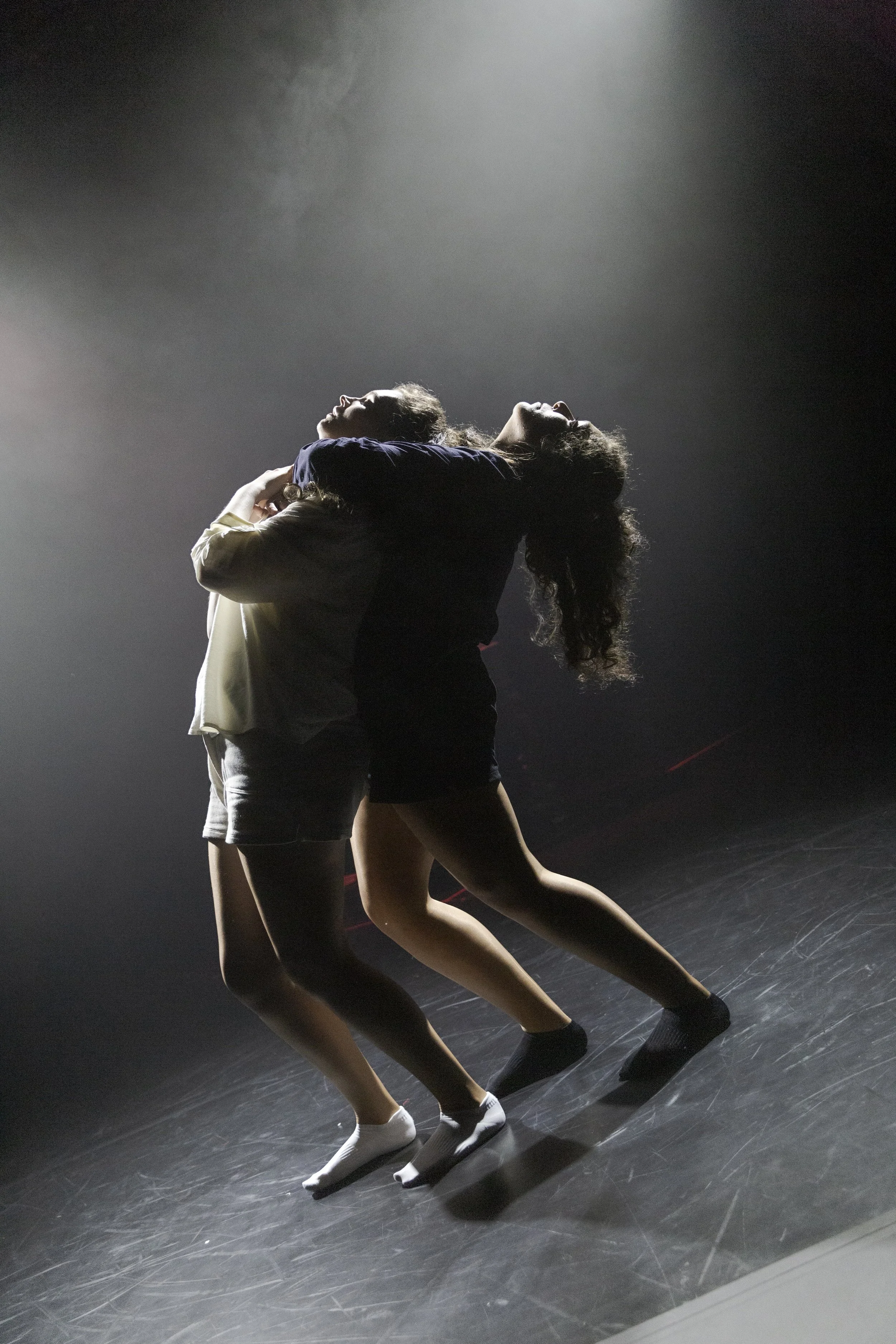
It’s My House was devised through a deeply collaborative process shaped by distinct artistic roles. Bee McQueen led on conceptual development, generating the majority of thematic ideas, questions, and provocations that seeded the world of the piece. Shaaray served as Director, shaping structure, guiding rehearsals, and facilitating decision-making with clarity and purpose. Emily composed the sound score, creating textured soundscapes that responded to the performers’ emotional and physical vocabularies.
The rehearsal room became a site of rigorous exploration and openness. Bee’s ideas were filtered through multiple devising techniques, including automatic writing, persona interviews, and group improvisation. Physical scores were developed using influences from Frantic Assembly’s Round/By/Through, the “machine” task from Company of Wolves, and object play with found materials. These exercises allowed each performer to deepen their persona from the inside out, working toward what Bee described as a “physiological dramaturgy”—where emotion, gesture, and sound formed an intuitive logic.
The group also used visual and tactile stimuli—drawing, scribbling, mapping—alongside movement-based somatic work to excavate emotional truths. Bee’s praxis brought in neuroqueer framing, working with the body’s instinctive responses to shame, performance, and legibility. The group experimented with interruption, vocal layering, and task-based scores to keep spontaneity and disruption at the heart of the process.
Reflecting on the collaboration, Bee noted a powerful shift in their role as a performer: “I began to relinquish control over how I was seen, and focus instead on how I was feeling. This wasn’t just more honest—it was more potent.” That spirit of shared risk shaped every part of the process. The result was a piece built not from consensus, but from coexistence: layered, unresolved, and raw.
The Politics of Being Seen
It’s My House emerged from a landscape of emotional contradictions—between performance and collapse, control and chaos, visibility and exposure. Its dramaturgy played with the tension of being watched, surfacing the question: how do we perform ourselves when we know we’re being perceived?
The work can be read through the lens of affect theory. As Sara Ahmed argues, “emotions do things”—they circulate between bodies, shaping how people align or misalign with each other (Ahmed, 2004, p.119). In the piece, the performers’ emotional states were not only expressed, but orchestrated, manipulated, even weaponised—showing the social pressures to be coherent, legible, or ‘ok’.
Bee’s persona, for example, was trapped in a loop of toxic positivity—“I’m fine! I’m fine!”—a survival strategy that masks internal collapse. This mirrors what Ann Cvetkovich calls “public feelings,” which emerge “in response to structures that render certain forms of suffering invisible” (Cvetkovich, 2012, p.13). In this frame, Bee’s exaggerated cheer is not a failure of authenticity but a form of emotional labour under duress.
The performance also examined the mechanics of gaze and audience. As Michel Foucault writes in Discipline and Punish, “visibility is a trap” (Foucault, 1975, p.200). The performers began merged, only splitting once the awareness of being seen took hold—suggesting that selfhood is fractured under surveillance. This awareness reconfigured not only the structure of the piece, but the performers’ relationships to each other and themselves.
In resisting a neat emotional arc, It’s My House refused the audience the comfort of clarity. Instead, it made space for layered, contradictory truths—asking viewers to feel rather than resolve.
References
Ahmed, S. (2004). The Cultural Politics of Emotion. Edinburgh University Press.
Cvetkovich, A. (2012). Depression: A Public Feeling. Duke University Press.
Foucault, M. (1975). Discipline and Punish: The Birth of the Prison. Vintage Books.
Credits
Performed and Devised by: Bee McQueen, Shaaray Sharif, and Emily Rae
Direction: Shaaray Sharif
Concept Development: Bee McQueen
Sound Composition: Emily Rae
Project Context: Collaboration module performance, Royal Conservatoire of Scotland
Format: One of four vignettes in inter/sections
First Performed: inter/sections Festival, Chandler Studio Theatre, Royal Conservatoire of Scotland
Special Thanks:
Julia Bauer (Photographer)
Lucas Chih-Peng Kao (Videographer)